
Why We Keep Falling For Celebrity Pastors | These Troubled Times S1E6
We've been set up for this since the 1700s, guys.

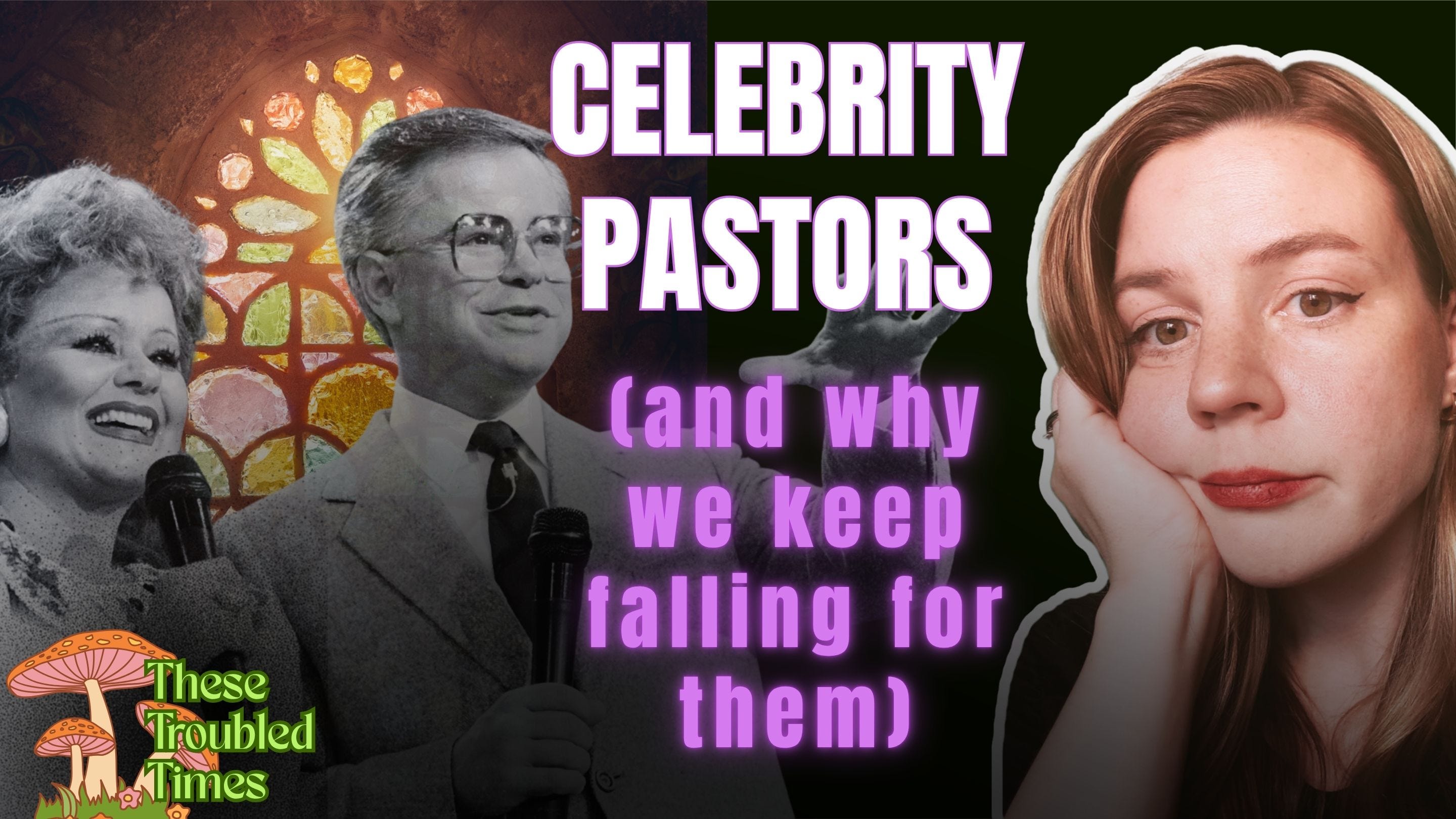
Jim and Tammy Faye Bakker made televangelism synonymous with hypocrisy and fraud, but the cycle of Christian superstars who rise to fame, then fall under the weight of their own scandals, did not end with Jim Bakker’s arrest in 1989. Three decades later, we’re still acting surprised at the downfall of people like Ravi Zacharias, Mark Driscoll, and Hillsong pastors Carl Lentz and Brian Cohen. At a certain point, we have to ask ourselves: why does this keep happening? Why do we keep falling for celebrity preachers, time after time after time?
The Rise and Fall of Jim & Tammy Faye Bakker
The Bakkers were once the “it couple” of Christian entertainment. Their late-night TV show, which felt like a cross between a church service and variety show, could hold its own against heavy-weight programs like The Tonight Show and Saturday Night Live. Donations poured in from viewers all across the country.
But in 1987, Jim Bakker faced two major scandals: a sexual assault accusation, and a FBI investigation that led to his 1989 arrest on charges related to fundraising fraud. Tammy Faye wasn’t charged with any crimes, but the public soured on her once they realized how her extravagant lifestyle was being funded. She became fodder for tabloids, comedy sketches and documentaries until her death in 2007. Jim, meanwhile, spent just five years in prison, and returned to television in 2003 with The Jim Bakker Show, where - to this day - he talks about the end-times and sells overpriced “doomsday survival kits.”
Even though televangelism was never really mine or my family’s “scene,” the circles I’ve run in have their own versions of celebrity pastors and evangelists. I’ve watched family and friends form unhealthy, parasocial relationships with Christian celebrities like Ravi Zacharias, James Dobson, Ray Comfort, Paul Washer, John MacArthur, Franklin Graham, Al Mohler and many more influencers who used books, radio and the internet to “remote-pastor” flocks that sometimes numbered in the millions.
Now, the more buttoned-down Christian celebrities will swear they are nothing like the big-hair, botoxed, prosperity-gospel televangelists. In fact, many of them have developed their brand around being the antithesis of that. But today I’m going to show you that they all have a lot more in common than they might like to admit, because they are all products of a Christian celebrity culture that has been five hundred years in the making. Let’s go back to where it all started: the Protestant Reformation.
