
Are complementarian Bible scholars laundering feminist critical theory?
Some field notes from my research for "The World of Proverbs" (Anastasis Wisdom Library Vol. I)

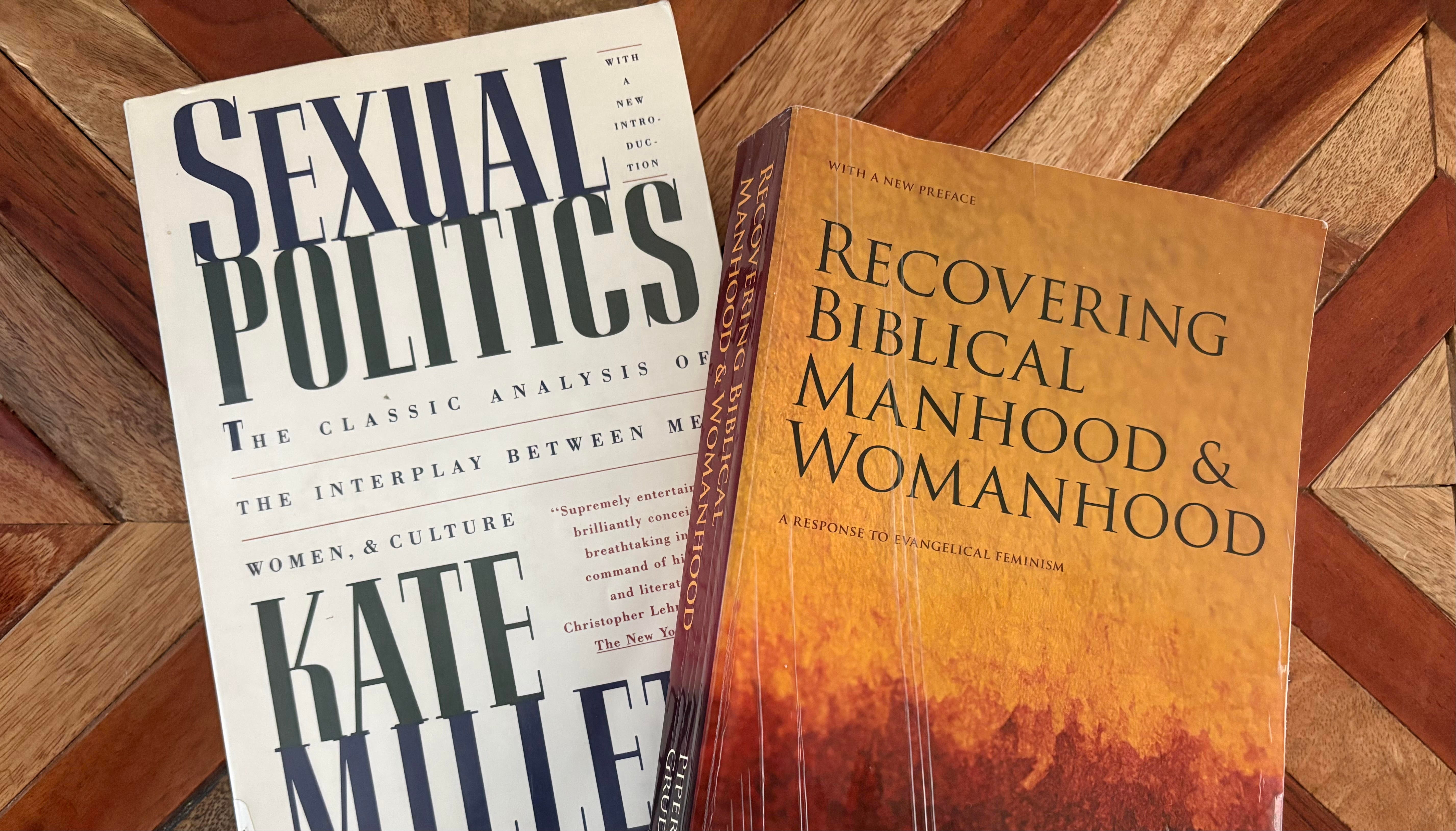
As part of my ongoing work for the Anastasis Center for Christian Education & Ministry, in 2026 I’m writing a devotional commentary on the book of Proverbs - part of the forthcoming “Anastasis Wisdom Library.” This article is the fruit of some research I’ve been doing for that project that won’t make it into the book, but was too fascinating not to share!
“In sum, she ‘rapes’ dull men by clever deceit.”
Several years ago I ran across this rather startling sentence while researching for a women’s Bible study I was writing and leading. It was in Bruce Waltke’s hefty 2004 commentary on Proverbs - considered by many to be the “gold standard” of scholarship on the book. There’s no question that Waltke is thorough. The two volumes together probably come to around 1,500 pages, and survey a dizzying amount of existing scholarship. But Waltke’s presumably complementarian commitments lead him to some dubious places, including the work of feminist critical theorists whose work is not necessarily friendly to the Bible, or Christianity.
The comment in question was on Proverbs 7:6-13 - a frame-by-frame description of an adulterous seduction, and its deadly consequences. In Waltke’s reading, the adulterous encounter will be fatal for the young man because the seductress’ plan is to “cry rape” when her husband comes home. Like Potipher’s wife, she can simply claim the encounter wasn’t consensual, and become the victim, instead of a co-conspirator against the husband. The “cuckolded” husband will certainly show no mercy and will prosecute the young man to the fullest extent of the Mosaic law, i.e. death.1 Waltke frames this, rather sensationally, as a “reverse rape” perpetrated by the woman, against the man.
There are a few plot holes in this story. The false rape accusation is Waltke’s explanation for why adultery might literally be the death of a young man. But as Waltke himself points out, the seductress has already “slain multitudes” by the time she lures our foolish youth. It’s hard to believe that a husband who catches his wife with a stranger in their bed would buy the rape story more than once. The false rape accusation is not in the text, nor is it a necessary inference; the woman’s statement that her husband is away from home pressnts a perfectly plausible opportunity to get away with adultery.
Even supposing that the text supported the rape accusation theory, there’s also the larger problem that Waltke has a troublingly narrow understanding of male-on-female rape, and a troublingly broad understanding of female-on-male rape. Waltke explains that “the male overpowers the female through brute force; the female, through seduction.” But by definition, seduction is persuasion, not coercion. Adultery and bearing false witness (if we’re to assume Waltke’s rape accusation theory) are bad - they’re just not rape. In fact, this reading undermines the point of the story because Proverbs is about making good choices; rape is about having your choices taken away.
(I’ll pause here to deliver a bit of free advice for the men: it’s almost never appropriate to use “rape” figuratively. Rape is a uniquely traumatizing experience that disproportionately happens to women. It’s a jarring and emotionally-charged word for almost any woman to hear, and with very, very few exceptions it ought to be used only when you are actually referring to literal, sexual assault, not as a metaphor for anything and everything you think is bad.)
When I first encountered the “reverse rape” interpretation, I was shocked and disappointed that Waltke could have come to such a misogynistic and harmful reading, because I found his scholarship on the Proverbs 31 woman to be surprisingly woman-positive. But when I revisited my Waltke commentary this year as part of work on The World of Proverbs, I realized the idea wasn’t original to him. It came from a 1993 book called On Gendering Texts: Female and Male Voices in the Hebrew Bible, by Athalya Brenner and Fokkelien Van Dijk-Hemmes. On Gendering Texts belongs to the genre of feminist critical theory, which is heavily influenced by Marx and Freud. In feminist critical theory feminist scholars examine historical texts - including the Bible - not to discern intended meaning, but to discover the (usually male) authors’ attitudes about gender.2
Critical theory is useful, to a point. Consider, for instance, the novel Gone With the Wind, which functioned to resurrect Lost Cause mythology.
Traditional literary criticism might approach Gone With the Wind asking “What is Margaret Mitchell trying to communicate about the character through this action?” A critical theorist would ask different questions, such as, “What does this character’s actions reveal about the author’s attitudes about race and/or gender?” As useful as critical theory can be, many Bible scholars (myself included) reject the method as an approach to Scripture, because the Bible wasn’t written by Margaret Mitchell, but by human authors under the inspiration of God.
Knowing that the “reverse rape” interpretation originated within feminist critical theory changes the picture dramatically. Feminist critical theory approaches historical texts expecting to find patriarchal and misogynistic undertones. When Brenner and Van Dijk-Hemmes infer that Proverbs’ adulterous woman is a man-killer who will cries rape on her gullible sexual partner, they are not arguing that this is something that a woman might actually do, but rather that the adulterous woman is functioning as a projection of Freudian, male anxieties about gender, sex and power. The fact that a prominent, male Bible scholar adopts their read on the situation uncritically, suggests that while they may be wrong on authorial intent, they may be onto something when it comes to those, Freudian male anxieties.
I don’t know whether Waltke misunderstood the purpose of Brenner and Van Dijk-Hemmes’ work, or whether he simply liked the idea of the “female rape” framing, and assumed (probably accurately) that most of his readers weren’t going to recognize the names in his footnotes. But it does fit into a working theory that I’ve been toying with for a while, that neo-patriarchy - both religious and secular forms - is less grounded in history, than in a radical-feminist reading of history.
In The Myth of the Sex War3 I argue that the “sex war” framing of gender relations was adopted by both radical feminists and evangelical gender traditionalists, and at roughly the same time. Even the term “patriarchy,” as we use it now (and by “we” I mean both feminists and patriarchalists) was coined by radical feminist Kate Millet in her 1970 book Sexual Politics. In other words, the fact that radical feminism and Christian patriarchy have been defining themselves in opposition to one another has shaped the contours of both in conscious and subconscious ways.
If I’m right (and like I said, it’s still just a working theory), there’s a lesson for all of us. Gender issues are important, but they must be held in tension with other realities and concerns. Totalizing narratives tend to give birth to more totalizing narratives, and in time worldviews that begin as negative reactions to one another, may develop into something more alike, than different.
“The Book of Proverbs: Chapters 1-15,” The New International Commentary on the Old Testament (Grand Rapids, MI: Eerdman’s, 2004), 359-376
“How to Interpret Literature: Critical Theory for Literary and Cultural Studies, Third Edition,” Robert Dale Parker (New York, NY: Oxford University Press, 2015)
In “What We’ve Been Missing: Reading Scripture Through the Eyes of Women,” forthcoming from Baylor University Press, 2028
Very thought provoking! Two extremes keeping us distracted from the truth that is in the middle.
Good insights. Waltke was always an ev scholar hero, and apocryphal (perhaps) stories of his linguistic prowess still abound at DTS. But he’s just one of many white male ev scholars whose books I’ve sold off the last few years, and for reasons you discuss. Alas…